Automation | Digitalisation | OT/IT infrastructure & security | Industrial Engineering | DIN Forsyning

The road to ‘The Future of District Heating’

Fossil-free heating with flexible production

With Esbjerg Power Station set to be replaced, DIN Forsyning faced a major challenge: establishing a new, flexible heat production system that could bring together multiple energy sources. The result was ‘The Future of District Heating’ at the Port of Esbjerg – an ambitious project integrating two seawater heat pumps, an electric boiler, a thermal storage tank, a biomass boiler and the ‘Ny Krone’ distribution centre into one interconnected system.

But how do you make so many different plants, technologies and supplier systems work together as one integrated solution?
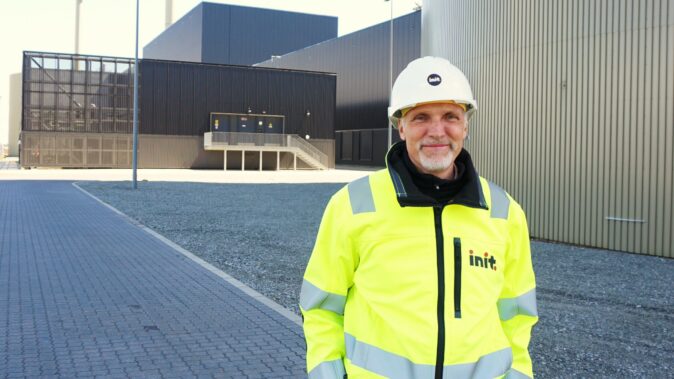
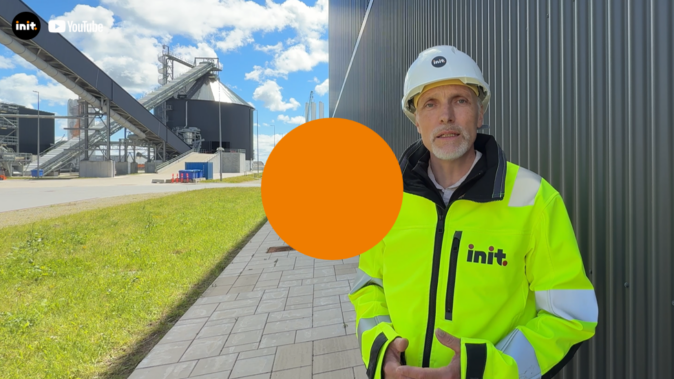
Henrik Grosen DIN Forsyning, Projektleder

Video 1: English subtitles available

Building a strong foundation
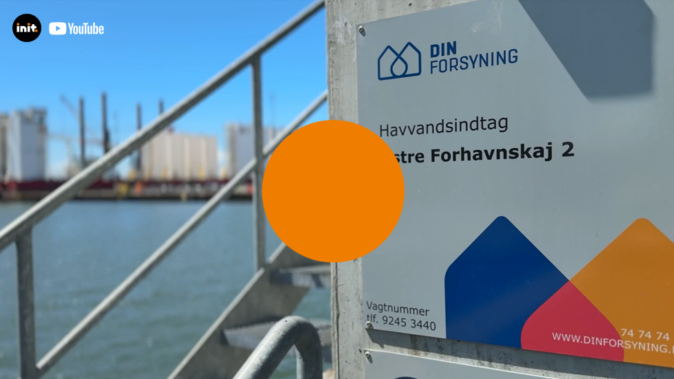
Bringing together several large production plants, different technologies and supplier systems into one integrated solution requires a common approach to automation. Init has played a key role in shaping this approach by developing a common PLC and SCADA automation standard across the facilities – including Denmark’s largest heat pump installation.


Init’s scope of delivery covers everything from control of individual plant units and safety solutions to UX development and control panels. A key part of the project has been ensuring that the many different systems work seamlessly together, allowing heat production to be controlled and monitored as one integrated operation. Operators benefit from a unified overview of plant operations, enabling them to monitor processes, manage alarms and respond quickly to changes in production. At the same time, the common automation standard ensures a consistent user experience across all facilities, regardless of technology or supplier.


But the solution has not been designed solely to meet today’s needs. The common platform has also been developed with the future in mind, allowing new production units and energy sources, including industrial waste heat, to be integrated into the existing control system. This provides DIN Forsyning with a flexible and scalable automation foundation that can evolve alongside the district heating production of tomorrow.

Video 2: English subtitles available

One unified and robust platform
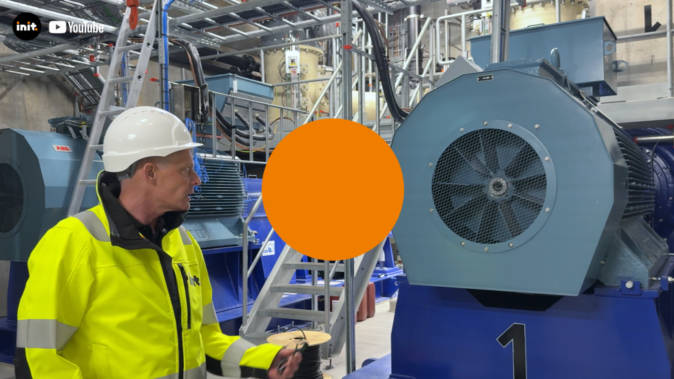
The plant’s electrical infrastructure is designed to handle power loads of up to 60 MW, placing high demands on electrical engineering, automation and system integration. A 60/10 kV switchgear system with a double busbar configuration provides both redundancy and flexibility, allowing loads to be transferred without interrupting operations.

The solution includes a 40 MW electric boiler and two 10 MW heat pumps, where precise control is essential for both process stability and grid load management. The heat pumps form the world’s largest CO₂-based seawater heat pump installation, capable of delivering a combined thermal output of up to 70 MW by harnessing energy from seawater. Approximately 4,000 litres of seawater per second are pumped through pipelines extending around one kilometre to and from the harbour basin. A 2.5 MW emergency power supply ensures that critical systems remain operational and enables a controlled shutdown in the event of a power outage.

The switchgear, distribution centre and emergency power system are integrated into the central SCADA system using standard communication protocols such as Modbus and OPC UA. At the same time, the plant controller functionality enables active control in response to energy market conditions and the balancing service provider. The result is a unified, robust operational solution in which independently delivered systems work together as one coordinated energy facility.

Video 3: English subtitles available

Infrastructure and security in the OT
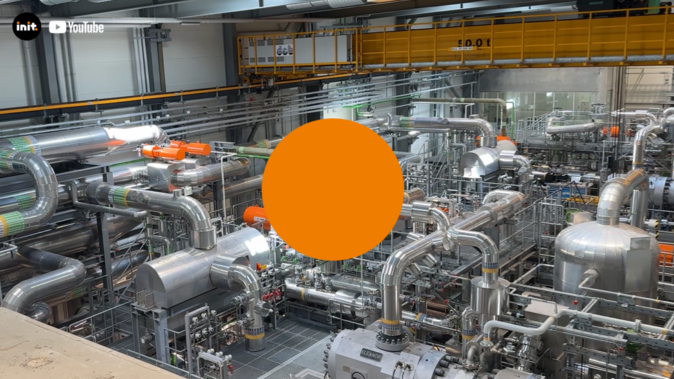
A facility of this scale requires more than intelligent control. It demands a digital infrastructure capable of withstanding both technical failures and cyber threats. The OT network has been designed for stable and secure operations with one clear objective: eliminating single points of failure. A redundant fibre-optic infrastructure connects two physically separate server centres, ensuring operational continuity in the event of failures affecting critical components or connections.

With island-mode capability, the facility can operate independently of the wider system, allowing local processes to continue even if higher-level systems or external connections fail. Automatic failover mechanisms reduce the need for manual intervention and minimise downtime.

The network is segmented using VLANs, firewalls and controlled interfaces between IT and OT. Cybersecurity has been integrated from the initial design phase, with IEC 62443 providing the framework for zones, conduits, documentation and secure communication. Continuous monitoring, patch management and close collaboration with the operations partner contribute to a solution that strengthens availability, compliance and operational reliability.

Video 4: English subtitles available

Standardisation and interfaces (UX, UI)
A common automation standard provides the foundation for consistent development, efficient operations and simplified maintenance. The platform is based on Siemens TIA Portal for PLC development and iFIX as the SCADA solution, with standardised modules for components such as pumps, valves and heat exchangers.

The shared component library ensures a consistent structure, interface design and alarm management across the entire facility. This reduces development time, simplifies troubleshooting and provides operators with a familiar and intuitive user experience.

SCADA displays and local operator panels have been developed according to a common style guide and the principles of situational awareness. This enables operators to gain a clear overview and maintain safe, effective control – even during faults and alarm situations. Centralised alarm management, historical data and integration with the energy market provide a solid foundation for analysis, optimisation and precise operational control. Standardisation also makes the solution both scalable and future-ready.

100.000

District heating residents

70 MW

Seawater heat output

45,000 m³

Thermal storage

About DIN Forsyning

DIN Forsyning is actively working to transition district heating production in the municipalities of Esbjerg and Varde towards fossil-free and more flexible energy sources. With The Future of District Heating at the Port of Esbjerg, seawater heat pumps, an electric boiler, biomass and thermal energy storage are combined in a solution that makes the most of energy when it is both environmentally sustainable and cost-effective.

The facility reduces dependence on fossil fuels while providing a robust platform for the future integration of additional energy sources, including industrial waste heat.

Reach out

for more information

Henrik Bech

Sales Manager

+45 26 22 76 66

[email protected]

Init Silkeborg, Denmark